The Star and Coordinates
We could call the star of Dhanishta simply “Dhanishta”—”The Wealthiest”. But it is also known as Alpha Delphinus. It is part of the constellation Delphinus (the Dolphin), which is north of the Aquarius constellation.
The section of the ecliptic that is apportioned to it is 17°11’ minutes of Aquarius to 0°31’ of Pisces. These coordinates are not constant, but they shift slowly.
The Myth
The most interesting myth relating to the deities of Dhanishta, the Ashta Vasu or Eight Radiances, is the story of Bhishma, how he came to be born and how he lived and died.
Here is a translation of the story, at least of the events leading to his birth, from the Mahabharata. I will paraphrase it here.
The Vasu, elemental spirits of high-standing, were walking on the earth with their wives. They were walking through a holy and magical forest near Mount Meru that was tended or presided over by Vasishta, a great sage. They came across the sacred, wish-granting cow, Kamadhenu, and the wife of Prabhasa (the sky deity) was enraptured by it. She wanted it, supposedly to give to her friend (as a means of preserving her friend’s youth and beauty), and she pressed her husband to take it for her.
At first he said no. He said, “No, this cow belongs to Vasishta.” He might have also said something like “We are gods. We are wonderful already and have no need for this cow.” But his wife pressed and he gave in. At that moment, he did not even realize he was stealing or committing a wrong action. He was just so motivated to please his wife. He got his brothers, the other Vasu, to help him take the cow along with her calf.
It wasn’t long though before Vasishta noticed his missing cow, and he became furious. He cursed the Vasu with a terrible curse, at least a terrible curse for gods—to be born on the earth as mortals!
Shortly after this, Prabhasa returned the cow and pleaded for Vasishta’s forgiveness. Vasishta would not remove the curse but he decided to lighten it. He said “All of you will have to be born on the earth, but on the bright side, most of you will live very short lives. In your case though, Prabhasa, you will have to live a full life. You will however be a noble and righteous individual.”
Thus is the story of how the Vasu came to be born as humans, and specifically how Prabhasu came to incarnate as Bhishma, the son of King Shantanu and Ganga (the goddess of the river Ganges).
As for how Bhishma came to be born of Shantanu and Ganga specifically, I will skip those details. But part of the arrangement of Shantanu and Ganga’s marriage was that Shantanu should never question Ganga’s actions. If he did, the marriage would end. Thus as their first seven children were born, Shantanu held his tongue (with great effort) as Ganga drowned all the children shortly after their births. (These being the 7 Vasu who were not required to live a full life.) After the eighth child was born though the king could not bear it any more and cried out “Why do you do this? Can’t you spare this one child?”
She agreed to spare this child, and she even told the king why all this was happening (the story of Vasishta’s curse), but since he questioned her actions, the marriage was annulled. She disappeared with the child but promised to bring him back one day.
He returned when he was close to adulthood. Ironically or interestingly, he was taught by Sage Vasishta in the meantime, in scriptures, in the skills of warfare, and in many other things. So when he returned as prince, he was very “fit” to be prince.
How He Came to Be Named “Bhishma”
The story goes on, and I will not describe all the details of Bhishma’s life. But there is one especially important event to mention—how he got his name Bhishma (which means “terrible” or “fearful”).
His father, Shantanu, having been left by Ganga, was unmarried. He had been all the years Bhishma, then known as Devavrata, was away. Shortly after Devavrata’s return though, he came to be enthralled by Satyavati, the daughter of the head of a fishing clan. Shantanu was deeply in love, and Satyavati was willing to be married. However upon asking her father for approval, he said he would only give approval on the condition that their child become the heir to the throne.
Of course this was not possible to Shantanu’s mind, him already having a son, and so he fell into depression and despair thinking the marriage to be impossible.
Devavrata (Bhishma) was saddened by his father’s condition, so saddened that he agreed to meet the marriage condition given by Satyavati’s father. How? He agreed to relinquish his rights to the throne and not only that to not have any children who may, when they came of age, vie for the throne. He took a vow of Brahmacharya—to live an ascetic life, not to marry or even have sex.
This is how he came to be named “Bhishma” for the terrible vow he took.
Bhishma’s Character
Bhishma was a paragon of duty and devotion, and clearly of sacrifices made in order to follow his duties and devotion. Eventually he fought in the Kurukshetra War, the war that is described in the Bhagavad Gita. He was the uncle of both sides that were fighting in the war. He was respected by both sides and in general and was known to be wise and a fearsome warrior.
Clearly he lived a life of atonement. He learned from Vasishta, the sage who he, as Prabhasu, provoked. And he lived a life of celibacy after being over-indulgent of his wife’s desires. Presumably after his death on the battlefield, he returned to his role as sky god.
The Symbol of Dhanishta
Now that we have discussed a myth associated with Dhanishta and before getting into any interpretation of what this could mean for us, if we have planets in Dhanishta, or what it could mean as planets transit through this nakshatra, let’s discuss the primary symbol: a drum.
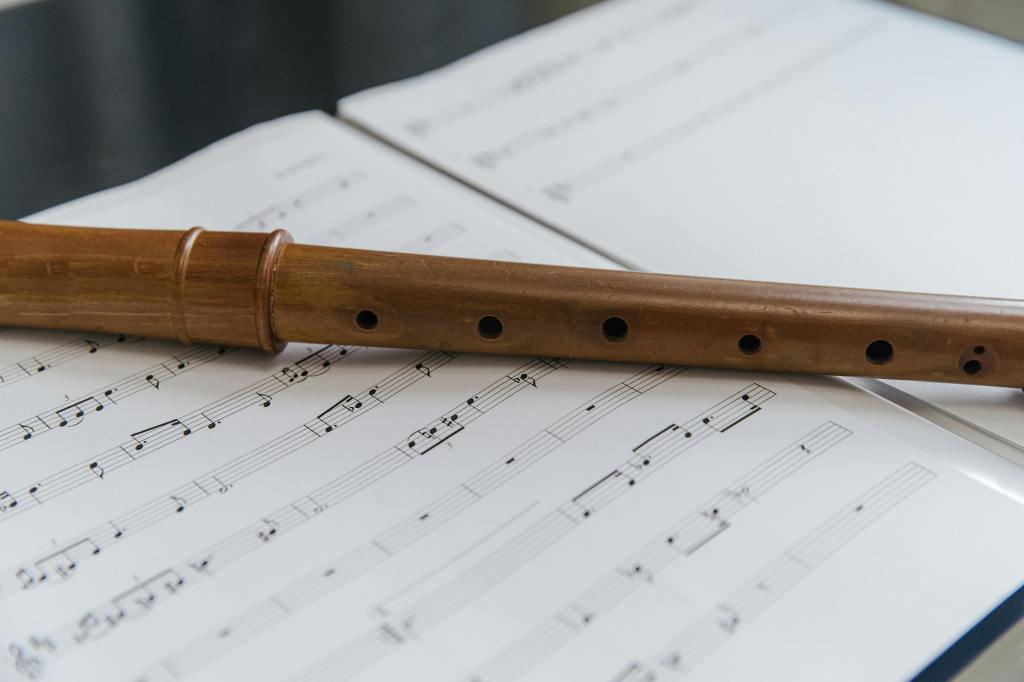
Another primary symbol is a flute.
I would encourage you to contemplate these symbols along with the myth mentioned above and any others that you encounter related to the Vasu. I will just be providing my perspective based on myth, symbol, and my experience thus far.
Interpretation
Actually let’s take a moment and reflect on what has been presented so far. Consider a drum: what stands out about that to you?
Consider a flute, what does that make you think of? Clearly they are both instruments. What could it mean that the symbols of Dhanishta are instruments?
Now think of the story we just discussed, what stands out most to you about that story? There is no right or wrong. But whatever stands out or stood out to you is probably important.
Starting with the symbols, them being instruments makes me think: what is your music? What makes you sing? What makes you dance? But it also makes me think: an instrument does not play itself. What is the source of our music? Surely it is the Divine Source. Even thinking about our Divine Self or Higher Self, that does not function in isolation.
A flute sounds different than a drum, and each flute sounds different from each other. The character and quality of the wood, or the metal matters, who made it and with what intentions. So to be an instrument does not mean to be without individuality.
Another important aspect of both a drum and a flute is that they are hollow. It was actually this realization that was my “aha moment” with regards to Dhanishta.
How good does a drum sound if something unwanted is rattling inside it? How good does a flute sound if it is clogged? What is getting in the way of us expressing our music, or what is getting in the way of allowing divine energies, be they ours or of a higher nature, to express themselves through us?
These are key questions to ask with Dhanishta.
It is easy to see how they connect to the myth as well. The story begins with selfishness, even to the point of taking that which was not theirs. Maybe it was a feeling of emptiness that led to this? But it ends with selflessness—with being an instrument for others or for greater purpose.
Clearly Prabhasu had some weakness that needed to be cleared out. It might be easy to focus on the difficulty or perceived difficulty of Bhishma’s life, but was it not just leading him to greater balance, to more inner strength?
Is it not possible or likely that his period of renunciation and relative solitude allowed him to return, in his heavenly role and marriage, more fit for that role and marriage?
These are just some questions I would ask…
Placements
I would like to encourage the above kinds of reflection and contemplation more than accepting quick and easy answers. Some of the usual descriptions of Dhanishta might be very off-the-mark if we do not have context and wisdom about where they are coming from.
For example, I have heard and it is often said that Dhanishta is “bad for marriage”. Seeing the above myth, it is easy to see that there might be some truth to this. But why and how and what can we do about it?
I would say that it is likely that marriage or relationships are going to be a significant area of life for learning for people with Dhanishta placements. They are for most people, but for those with Dhanishta there tend to be some weaknesses related to excessive desire, not being satisfied with what you have, that lead to relationship problems. There might be weaknesses related to giving into your partner’s wants, even if you are not aligned with them.
As planets transit Dhanishta, it is possible that these themes will tend to go up for everyone. (Life has a way of always poking at our weaknesses wherever they may be.)
There might be more relational challenges than the average person (at least more corresponding to these themes) for people with Dhanishta placements. But I do not think it’s any kind of “death sentence”. We learn, we improve, we get over it.
There do exist difficult and fixed karmic limitations. I do not want to ignore that. Some people may be destined to a life of renunciation. But more often, it is our fears or our lack of acceptance that hold us back. Consider the fact that Bhishma did not think his life too hard or his restraints too great. He just did what he needed to do.
Secondly, it is often said that Dhanishta relates to wealth. The root word “Dhana” means wealth or valued objects. The myth does speak of wealth or valued objects as well—the sacred cow. But we can see how caring about wealth in a materialistic way or in a way that might be trying to fill a void, is probably not the highest form of this nakshatra. It may be a weakness. It may be an early life theme. But I would not consider it the end-all-be-all of this nakshatra.
More likely, this nakshatra relates to the realization of inner wealth.
If you feel a lack, consider all the blessings you already have. If you feel unworthy, consider how much more worthy you are compared to a year or two ago.
Perhaps you do not have as much outwardly as you did a year or two ago or longer, but consider how much you have improved, how much more validation you can give yourself now. (And if you don’t feel that, I would encourage you to make a change and then revisit this thought in a few months or years…)
Conclusion
I hope you enjoyed or found some inspiration in this discussion of the nakshatras and Dhanishta in particular. Feel free to leave a comment with anything that comes up for you.
I would like to express gratitude for Vic DiCara for his lessons on the nakshatras and all the surrounding mythology and culture. I would like to express gratitude for the planets and for all the forces and beings that allow us to live this life. I would like to express gratitude for the opportunity to write, to share, and to learn about myself in doing so. Thank you.ke to express gratitude for the opportunity to write, to share, and to learn about myself in doing so. Thank you.
 Travis Astrology
Leave a comment